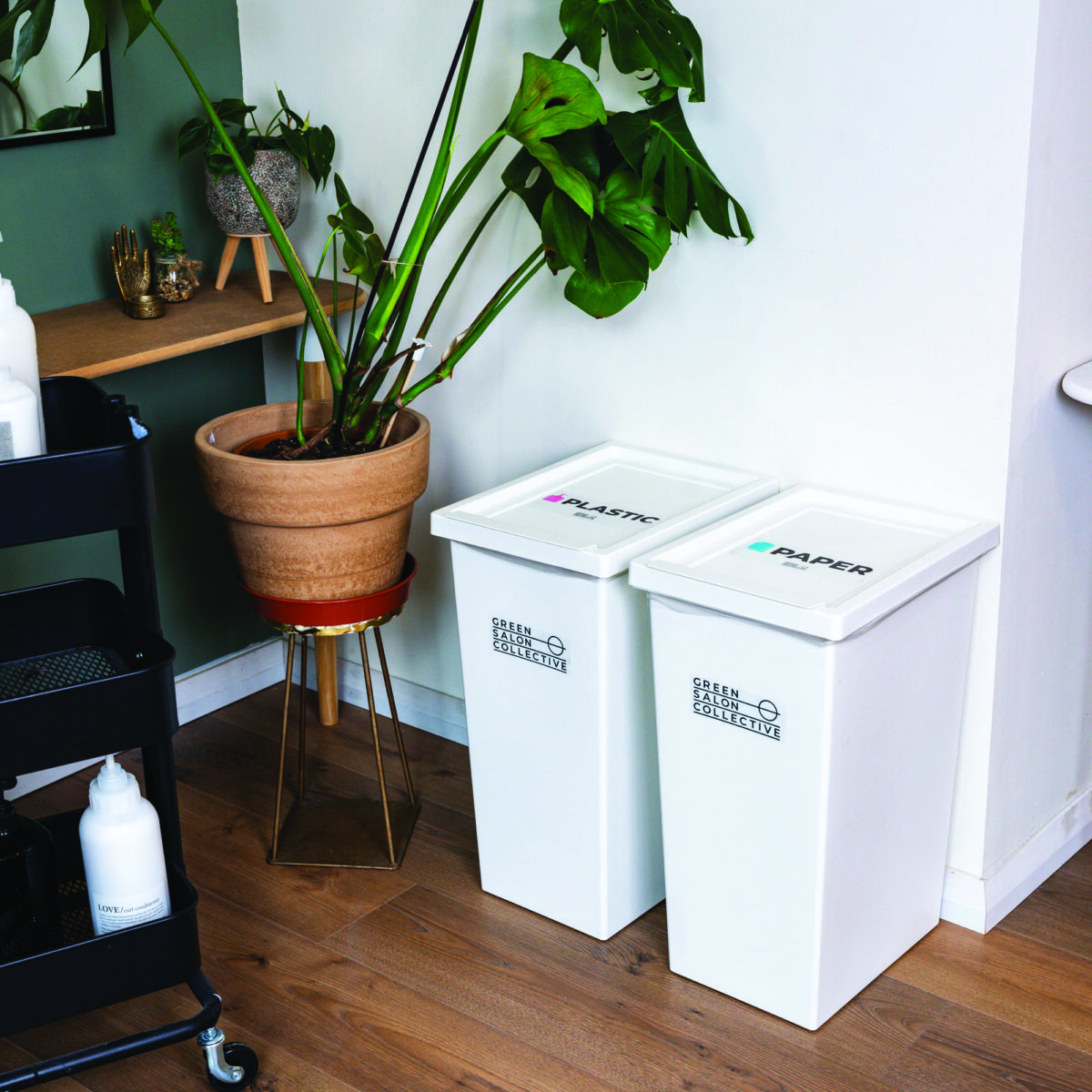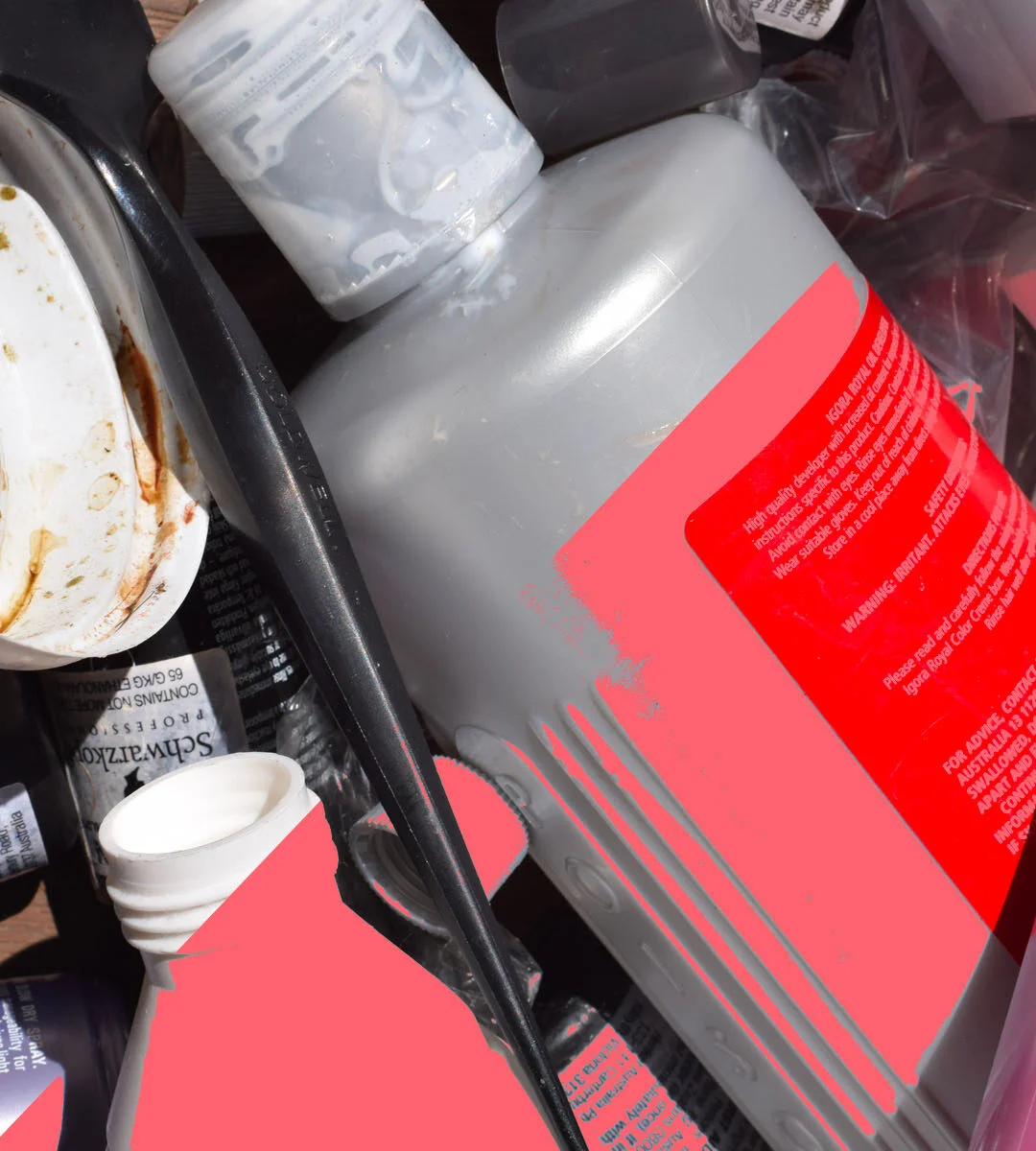
According to a 2019 survey by Green Salon Collective, the average salon recycling bin has a recycling rate of just 8%. So, this Recycling Week [Oct 14-20], we’ve teamed up with GSC to encourage you to take a closer look at what you’re putting in that recycling bin.
Published:Recycling can be a bit of a minefield with a growing number of logos, as Susan Collins, of Home of hair says: “My top tip? Learn your recycling label!”
For starters, the green dot just means that the producer of the packaging has made a financial contribution to recycling in general in Europe.
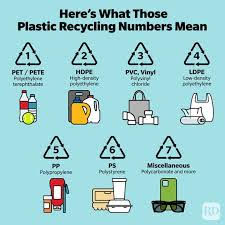
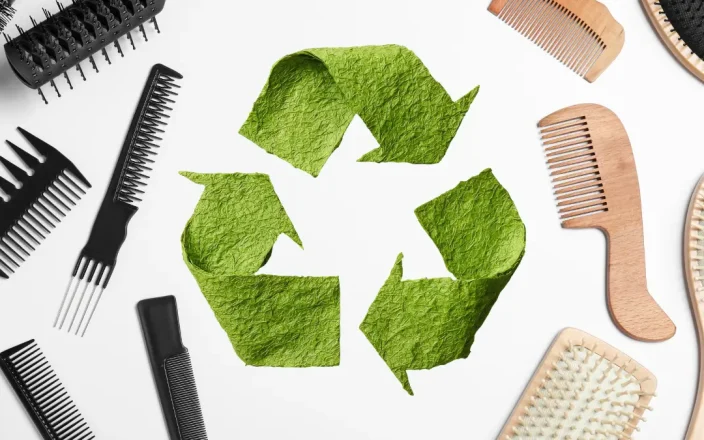
The Mobius loop [which most would recognise as a recycling label] means it might be recyclable depending on where you live, and they often come with a number inside to differentiate the material.
According to Susan, when you find numbers one and two inside, these are the mostlikely to be recyled in your regular bin collection. For the rest you can take it to your local recycling centre or look up recyclenow.com to find out where to take your waste.
How you recycle is important too, as Shareefa Jennings, Lead Hair Care Expert at Cognito Hair says:
“Be sure the recyclable items are not contaminated with food residue. One contaminated item can spoil an entire load of recyclable items.
“Common mistakes are not washing out that peanut butter jar or milk carton or recycling foil with food stuck on it. Contaminated items that cannot be washed will, unfortunately, need to go into general waste. Soft plastics can also be classified as contamination and should be recycled at your local supermarket, not at home or work.”
Even better still, we can all reduce the amount of packaging waste we generate as Shareefa adds: “Refusing to use and buy items that may produce unnecessary waste, such as single-use items, is essential because recycling should be the last point of action. Investing in items you can use more than once is vital, so think creatively.
“Adopting a zero-waste lifestyle will help reduce the waste you produce; think of buying in bulk or using refill sources at zero-waste stores. You can even reuse containers or jars before recycling them. It’s important to know that just because something is made from recycled materials does not mean it can be recycled. The purpose of recycling is to turn your waste back into reusable materials.”
Let’s work together to protect our planet and dispose of our waste responsibly by recycling correctly.