How Salons Can Adapt Cut, Colour and Care for Thinning Hair.
Published:When clients are experiencing thinning, fragile or reduced-density hair, a considered approach to cutting, colouring and styling can help protect the hair while creating the appearance of greater fullness.
Hair Loss Awareness Month is an opportunity for salons to look at how they can better support clients experiencing hair thinning or hair loss. According to GLOWWA, the focus should be on protecting vulnerable hair first, while using thoughtful salon techniques to create the appearance of density where possible.
For hairdressers, this can mean reconsidering some of the techniques routinely used behind the chair and adapting services around the condition and strength of the client’s hair.

When working with fine or thinning hair, less can often be more. Errol Douglas MBE, GLOWWA’s Global Brand Partner, advises against excessive texturising, heavy point cutting and over-layering, which can remove weight and make hair appear finer.
Instead, precision cutting can be used to create the illusion of density. Strong one-length shapes, soft bobs and balanced silhouettes can help retain weight, while avoiding wispy ends that may emphasise thinness.
GLOWWA ambassador Jack Mead takes a similar approach, recommending strong, clean shapes with carefully placed texture to introduce movement without sacrificing the appearance of fullness.
“Strong, clean shapes with carefully placed texture can create movement while maintaining the illusion of fullness. Often, removing less hair actually makes it look thicker.”

Colour can be an important part of a client’s confidence, but the condition of the hair should remain central to the service plan.
Mead recommends looking for ways to achieve the client’s desired result while placing as little stress on the hair as possible. Depending on the client’s needs, this could include strategic highlights rather than an all-over bleach application, softer root blends or high-lift colour where appropriate.
For Emily Rose Monk, another GLOWWA ambassador, hair condition and colour are closely connected. Hair that is in poor condition may not appear as thick or full, and healthy-looking hair can showcase colour more effectively.
That means stylists may need to consider avoiding overlapping lightener, spacing out colour appointments or using carefully considered placement to create brightness and dimension without compromising vulnerable areas.

The benefits of adapting the service can be seen in the experience of one of Mead’s clients, Anne. Her hair had become extremely fragile, was prone to snapping and struggled to grow beyond a certain length.
Rather than continuing with heavy bleaching, Mead created a cut and colour plan focused on protecting the hair’s integrity. He maintained Anne’s blonde with a light full-head tint and just eight strategically placed foils through the parting. A strong blunt bob was used to maximise the appearance of density, with a small number of soft internal layers added for movement.
Alongside GLOWWA Hair Food as part of her daily routine, the approach resulted in Anne describing her hair as feeling “twice as thick”, as well as healthier, stronger and more resilient.
The salon conversation can also extend beyond the cut and colour appointment. Heat, aggressive brushing, over-blow-drying and repeated tension can all put additional stress on vulnerable hair.
Tight ponytails and braids, as well as heavy extensions, may also need to be reconsidered where hair is weakening around the hairline or traction alopecia is a concern.
Douglas highlights brushing as another area where clients may unknowingly cause damage.
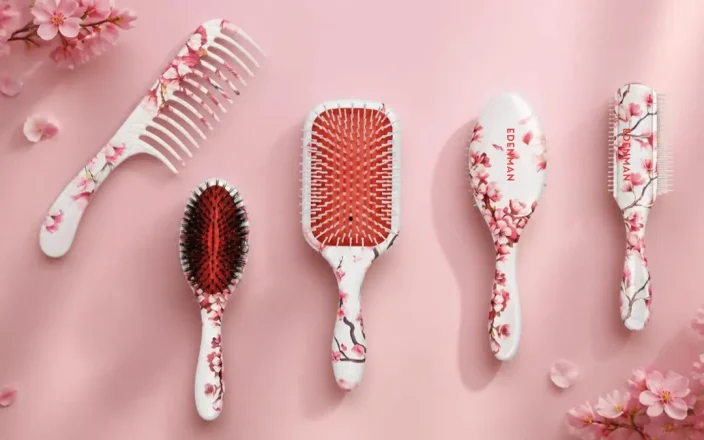
“Some brushes marketed as detangling tools can still pull, snag and break fragile hair if they’re used too aggressively. Recommending that clients choose a tool suited to their hair type, work from the ends upwards and avoid forcing a brush through knots”.
For styling, Mead recommends lightweight volumising products and root-lifting techniques to create body without introducing unnecessary tension or heat.

For clients with textured or Afro hair, Douglas says that repeated tension and additional weight on already weakened hair require particular consideration.
He recommends minimising excessive heat, tight hairstyles and repeated tension, particularly where traction alopecia is a concern. He also notes that sew-in extensions or adding weight to weakened hair can potentially make the situation worse, highlighting the importance of early intervention.
The press release also highlights an “inside-out” approach to hair health, combining salon services with homecare, nutrition and ongoing support.
GLOWWA Hair Food is described as a daily food supplement containing vitamins, minerals and amino acids, with formulations available for women, men and those navigating menopause. The brand also offers GLOWWA Collagen and GLOWWA Collagen Creamer, both containing patented bioactive collagen peptides.
For clients using nutritional support, consistency is also emphasised. Douglas recommends committing to at least 12 weeks and documenting progress through photographs and videos, helping clients see gradual changes over time.
View this post on Instagram
Ultimately, the salon’s role isn’t necessarily to have every answer. Instead, hairdressers can use the consultation to listen to clients, assess what their hair can safely manage and create a realistic plan that connects the salon service with their everyday hair routine.
GLOWWA also offers an approved Hair Nutrition course, designed to help hairdressers become GLOWWA Certified Stylists and develop their knowledge and confidence around an inside-out approach to hair health.
More Information
Online: Glowwa
Instagram: @glowwa
Read Now: How Salons Can Better Support Clients Experiencing Hair Loss.
View this post on Instagram